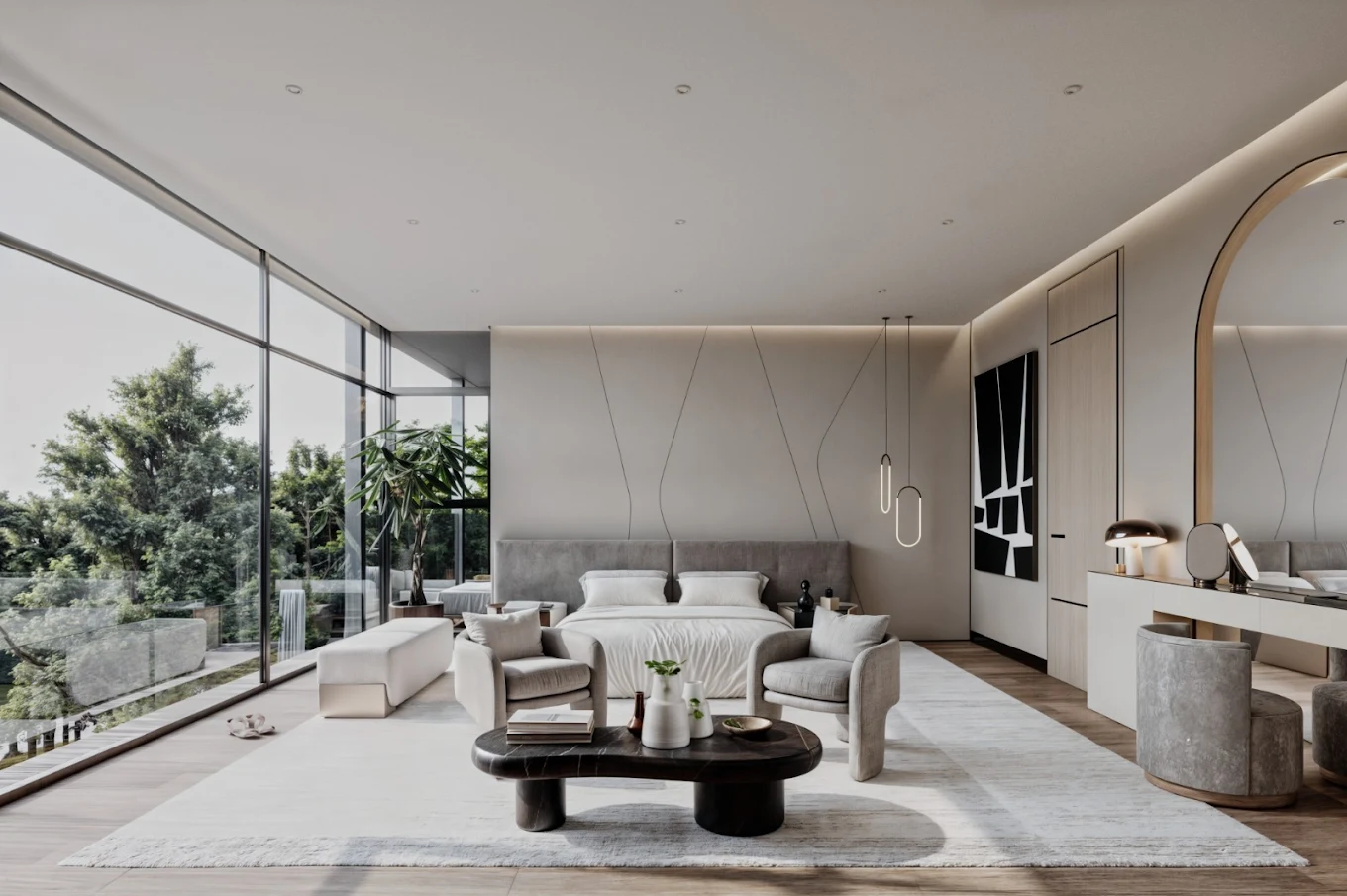
Nairobi’s standalone and villa market remains one of the clearest ways to read long-term residential wealth, family demand, and premium-location strength. This market intelligence guide breaks down prime areas, current pricing, gross ROI trends, and how investors are approaching villas, townhouses, and gated communities across Nairobi and the surrounding commuter belt.
Nairobi Standalone Homes, Villas & Gated Communities Market Intelligence
Market Overview
Nairobi’s landed-residential market is still a premium asset class, even in a city where apartments now dominate housing supply. Current market data from Kenya Property Centre places the average asking price of houses for sale in Nairobi at about KES 100M, while average asking house rents sit around KES 290K per month. The same portal places the average asking price for houses in gated communities in Nairobi at about KES 80M, which helps frame the market: this is not an entry-level segment. It is a capital-intensive market shaped by land scarcity, family demand, and location quality.
What matters most is that the market is not one single category. Nairobi’s standalone and villa segment splits into three broad zones. There is a prestige and capital-preservation belt, a premium family and balanced-return belt, and a yield-led commuter belt in the towns surrounding Nairobi. Investors who treat all villas the same usually misread the market. The buyer profile, expected return, and exit strategy vary sharply by location.
The Prime Villa Markets in Nairobi
At the top end of the market, the clearest prime standalone locations remain Muthaiga, Karen, Gigiri, Runda, Kitisuru, Rosslyn, Lower Kabete, and Lavington. These are the areas where buyers are paying not just for a house, but for land value, school access, greenery, privacy, security, and long-term address prestige. Current asking sale benchmarks place Muthaiga at about KES 348.67M, Karen around KES 109M, Gigiri around KES 195M, Runda around KES 110M, Kitisuru around KES 80.4M–86.57M, Rosslyn around KES 85M for 4-bedroom stock, Lower Kabete around KES 133M, and Lavington around KES 75.49M.
Land values reinforce that hierarchy. HassConsult’s land data, as reported in January 2026, put land at about KES 76M per acre in Karen and KES 101.1M per acre in Runda, while premium central development zones such as Riverside and Westlands were far higher. That matters because it explains why true standalone stock in prime neighborhoods remains structurally scarce and difficult to replicate. In this segment, land value is part of the investment thesis, not just the house sitting on it.
How the Market Is Segmenting
The first bucket is the capital-preservation market. This is where Muthaiga, top-end Karen, and parts of Gigiri sit. These neighborhoods are driven less by headline yield and more by prestige, diplomatic-grade demand, large plots, and intergenerational wealth positioning. Muthaiga is the clearest example: with asking sale pricing around KES 348.67M and asking rents around KES 500K per month, the implied gross asking yield is only about 1.7%. That is not a cashflow market. It is a scarcity and status market.
The second bucket is the balanced premium family market. This is where Runda, Lavington, Lower Kabete, Rosslyn, and parts of Kitisuru sit. These areas still carry strong address value, but they also have better day-to-day rental relevance than the ultra-prime trophy belt. Using current asking benchmarks, Runda is around KES 110M for sale and KES 416K per month to rent, implying roughly 4.5% gross asking yield. Lavington is around KES 75.49M for sale and KES 350K per month to rent, implying roughly 5.6%. Lower Kabete is around KES 133M for sale and KES 589K per month to rent, implying roughly 5.3%. These are healthier numbers for investors who want both location quality and usable rental performance.
The third bucket is the yield-and-volume commuter belt just outside Nairobi County. This includes Ruiru, Syokimau/Mulolongo, Kitengela, and Ngong. These are not prestige villa markets in the Muthaiga or Karen sense, but they are where many investors find the strongest gross-yield logic in landed housing. Current asking benchmarks show Ruiru at about KES 22.01M for sale and KES 140K per month to rent, implying about 7.6% gross asking yield. Syokimau/Mulolongo sits around KES 18.46M for sale and KES 90K per month to rent, implying about 5.9%. Kitengela sits around KES 12.25M for sale and KES 60K per month to rent, also around 5.9%, while Ngong sits around KES 15.69M for sale and KES 80K per month to rent, implying about 6.1%.
ROI: What Investors Should Actually Expect
For this segment, “ROI” should be read carefully. The numbers above are gross asking-yield proxies, based on current asking sale prices and current asking rents. They do not include vacancy, maintenance, landscaping, service charges, security, taxes, agent fees, or financing costs. That matters a lot in the standalone and villa segment, where upkeep costs can be meaningful and tenant replacement cycles can be slower than in the apartment market.
In practical terms, the market is telling investors three different things. If you want wealth preservation and premium land exposure, look to Muthaiga, Karen, and top-end Gigiri. If you want balanced income with a premium family tenant base, Runda, Lavington, Lower Kabete, Rosslyn, and parts of Kitisuru make more sense. If you want higher gross yield at a lower entry ticket, the strongest current data points are in Ruiru, Ngong, Kitengela, and Syokimau/Mulolongo.
What the Latest Market Direction Is Saying
The broader Nairobi market also supports this selective approach. HassConsult’s Q4 2025 market commentary said suburban rents rose faster than prices, pushing Nairobi suburban residential yields to 7.4%, the highest level in their records since 2007. The same reporting said Runda led quarterly house-rent growth, while Lavington was one of the stronger house-price growers. In other words, the market is not rewarding every location equally. It is rewarding the right mix of address, rentability, and scarcity.
That is why micro-location matters so much. A well-managed townhouse in the right Runda, Lower Kabete, or Lavington pocket can outperform a bigger but less efficient house in a weaker micro-market. In the villa segment, school access, road connectivity, security quality, garden size, backup infrastructure, and estate management often matter as much as bedroom count. That is especially true in the family and executive-rental segment, where tenant quality is often more important than chasing the highest nominal rent.
Investor Approach: How to Read the Market Properly
The best investor approach is to start by deciding what kind of return you want.
If the goal is capital protection, pay more attention to land scarcity, neighborhood status, and long-term defensibility than to headline rent. If the goal is family-market income, prioritize areas with proven school, retail, and diplomatic or executive demand. If the goal is yield and faster payback, the most sensible hunting ground is usually not prime west Nairobi, but the stronger satellite-townhouse belts where entry prices are lower and take-up can be faster.
It is also worth separating standalone homes, villas, and gated-community townhouses. Standalone homes in Muthaiga or Karen behave differently from gated townhouses in Runda or Lavington, and both behave differently from suburban family homes in Ruiru or Kitengela. A gated-community townhouse often provides a cleaner rental product because maintenance, security, and tenant expectations are easier to standardize. Pure standalone homes can be stronger on land value, but they are usually more management-heavy. Current KPC data showing gated-community houses in Nairobi averaging about KES 80M is useful because it highlights how large that mid-to-premium managed-housing market has become.
Final Take
Nairobi’s standalone and villa segment is still one of the clearest windows into long-term residential wealth and family demand, but it is not a one-answer market. Muthaiga, Karen, and Gigiri remain the prestige and capital-preservation plays. Runda, Lavington, Lower Kabete, Rosslyn, and Kitisuru sit in the more balanced premium family bracket. Ruiru, Syokimau/Mulolongo, Kitengela, and Ngong are where the entry price drops and the gross-yield logic becomes more compelling.
For buyers and investors, the real question is not which area is “best.” It is whether you are buying for yield, landed lifestyle, tenant quality, or capital protection. Nairobi’s villa market answers each of those goals differently, and that is exactly why a segmented approach works better than a generic one